I trusted Achievable 100% — and still didn’t pass 💔

I’m writing this post not out of anger, but out of genuine frustration and sadness.

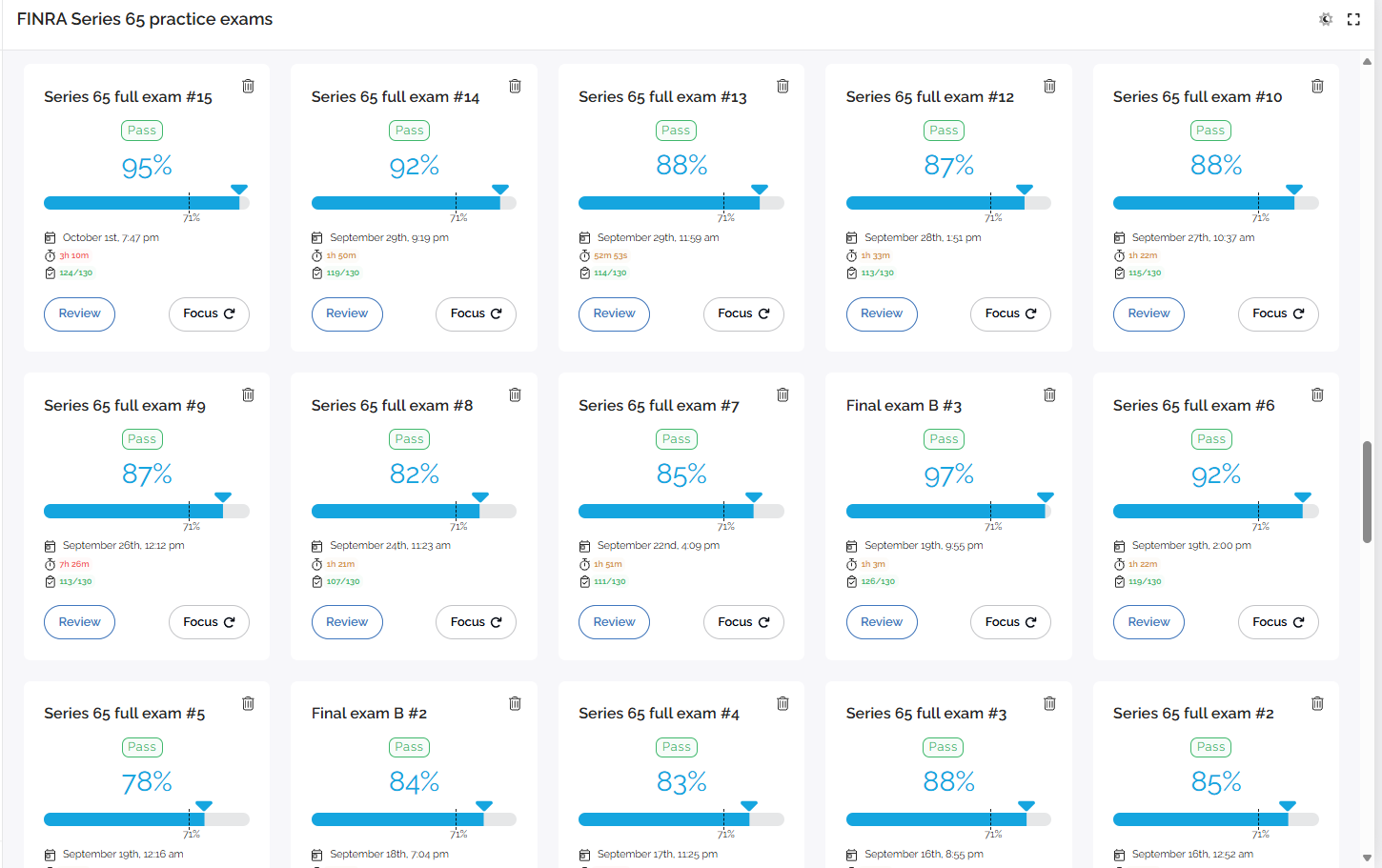
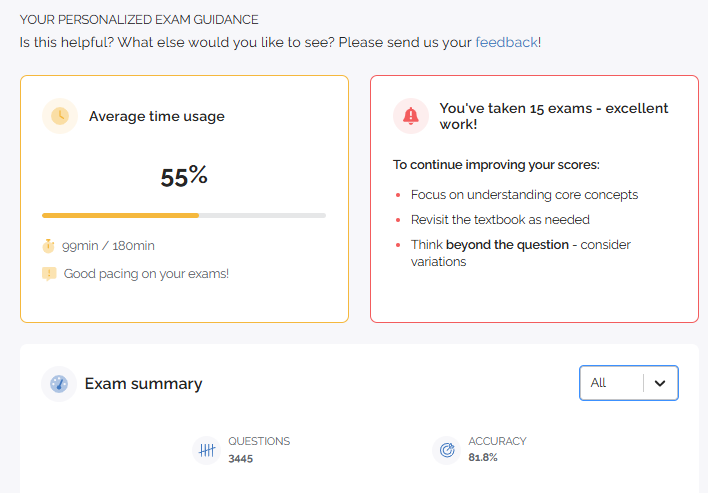
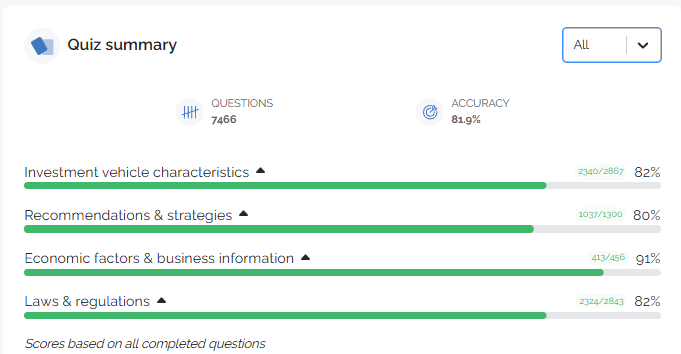
I gave everything I had for this exam. I followed Achievable step by step — finished 100% of the material, read all 165 pages, studied for over 225 hours, answered more than 10,000 questions with over 80% accuracy, and took 15 full-length exams, consistently scoring between 82% and 97%. My readiness score said 100% — nailed it!

I truly believed I was ready. I even flew from Brazil to the U.S. just to take the test in person, because I trusted the process and wanted to give my best shot. But the result was 83/130. The exact same score I had on Kaplan Master Exam.

The feeling of sitting there, realizing the real exam felt different — more wordy, more nuanced, and harder to interpret — was devastating. I kept thinking: How could I be this prepared and still not make it?

I’m not a native English speaker, and I know that adds an extra layer of challenge, but I still expected that after so many hours and consistent high scores, the real exam would feel more familiar.

I’m sharing this because I want to be honest — not just for myself, but for others who are working hard and trusting the system.

I still appreciate the structure and motivation Achievable gave me. But I believe this story deserves to be seen — to remind others that sometimes, even with 100% effort, results don’t reflect your dedication.

Thank you for reading — and if you’re on this journey too, please don’t give up. :blue_heart:

Paula :brazil:

1 Like

Hi @Paula_Farias, thank you so much for sharing. We’re sorry you didn’t get the result you were hoping for after putting in so much effort.

As you prepare for your next attempt, here are a few focused suggestions that can make a big difference:

  1. Prioritize deep review over volume. Spend at least twice as much time reviewing each test as you did taking it. Focus on why each answer is right or wrong, and make quick notes or cues to help lock in key distinctions.

  2. Target nuanced topics. Pay extra attention to complex, wording-heavy sections, such as exemptions, disclosures, account types, and ethics. Use smaller, focused quizzes to master each area before moving on.

  3. Simulate real testing conditions. When taking practice exams, treat them like the real thing: limit distractions, use your time wisely, and take them in the same window ( do not use other tabs to reference any materials) while taking the exam. Afterward, review your results, focus on weaker areas, and revisit related material.

We know how much you’ve put into this journey, and we’re confident that with a few minor strategy adjustments, you’ll cross the finish line next time. Só Sucesso! :flexed_biceps:

Best,
Mataia

1 Like

Hi Paula, thank you again for being so open in sharing your story. The dedication you’ve shown is incredible - it’s clear you’ve put in a huge amount of time and effort, and that commitment is something to be proud of.

That said, a few patterns in your study history help explain why the real exam felt tougher than expected:

1. Memorization vs. mastery.
It looks like much of your study time was spent taking large numbers of practice exams, but without the same level of time devoted to reviewing them afterward. This tends to reinforce memorization of individual questions, rather than building mastery of the underlying concepts. Since the real exam words things differently every time, memorization doesn’t translate - only conceptual understanding does.

2. Final Exam retakes show this clearly.
Final Exams A and B are identical every time you take them. After the first attempt, most students should quickly move toward 100% scores because they’ve already seen the exact questions. But your results on A (69 - 58 - 82) and on B (81 - 84 - 97) suggest that the concepts weren’t fully absorbed - you were re-encountering the same questions but still struggling with them. That’s a strong indicator that memorization alone was carrying you part of the way, without deep understanding.

3. Speed vs. careful reasoning.
I also noticed that on many exams, you averaged around 30 seconds per question. Especially as a non-native English speaker, that’s barely enough time to read carefully, let alone work through the subtle distinctions the test is known for. Working too quickly trains surface-level recognition rather than the deliberate reasoning you’ll need on exam day. Given this, you may want to explore whether you qualify for an accommodation that provides additional test-taking time, which could relieve some of the pressure and allow you to demonstrate your full ability.

4. Coverage matters.
It also looks like you skimmed through about 10% of the content instead of fully working through it. Even though that might not seem like much, every section matters - and the exam often focuses on dense, wording-heavy topics like disclosures, exemptions, and ethics. Without a deep understanding of every section, the real test will naturally feel unfamiliar.

The big takeaway is this: the issue isn’t effort - you’ve clearly shown you can put in the hours. The challenge is where that effort is going. Shifting your focus from volume and memorization toward slower, deeper review and complete content coverage will make your study time much more effective. With your work ethic, I’m confident that this adjustment will help you turn all that effort into the result you deserve.

We believe in you, Paula - you’ve already proven your dedication, now it’s just about fine-tuning your approach. Please let us know if there’s anything else we can do to support you.

2 Likes

Thank you all for all the support so far, I’m going back to studying today.

1 Like

@Paula_Farias You got this! Please let us know if there’s anything else we can do to support you as you study.

Thank you,
Mataia

Hi Paula - Greetings from the USA!

First off, sorry for your luck in not passing after having studied for as much as you did and having traveled to the USA to take your exam. I can only imagine the feeling you had after not having passed your exam given that scenario.

Despite the heartbreak, I’m confident that you can pass, regardless of the initial setback. The above responses make a lot of sense in terms of absorbing the material vs. potentially remembering answers. This is extremely important because you are not a native English speaker and to your point, the language on the actual exam can different than your exposure to the Achievable study material.

My two suggestions for you are to continue challenging yourself in the areas that you were weakest. These areas are indicated on the printout of your score from the testing center. This gives you a good idea of what areas you should focus.

Secondly, I would recommend supplementing your learning material with a competing vendor. Not that I dislike Achievable, I like them a lot, but it will give you more exposure to different questions, which will give you the broadest range of exposure to various questions. Each vendor writes their questions differently, which will certainly give you more of a challenge to fully understand the material.

Personally, I am balancing three study programs. Achievable, Kaplan and The Series 7 for Dummies book. For each section that I am struggling, I will reread that section with the other testing material, so I can hear a different explanation. Each one of them has their own Tests in which I will cycle taking one, then a different one the next day.

Also, I would also suggest watching YouTube videos as an additional supplement. The “Series 7 Guru” and “Capital Advantage” are wonderful resources. Plus, read the Reddit page r/Series7exam for other insights from others in our position that are studying or have recently studied to get a different perspective.

Remember, YOU GOT THIS! You have 30 days to prepare for a 30-year career. You’re clearly in a great spot; you just need to finetune a few areas and I’m certain you’ll pass. Good luck and keep us posted along the way!

1 Like